How it works
The loop, step by step
Five steps from what customers said to what you shipped, and back. Each answers a question you already ask.
Most product decisions are made on a hunch and a quote. Not because anyone is careless, but because the evidence lives in twenty places, nobody has time to gather it, and the loudest customer is always the most recent one. Building got faster. Deciding did not get better.
Quack Stack keeps the why. Every step below is one question, answered with evidence you can check.
What did people actually say?
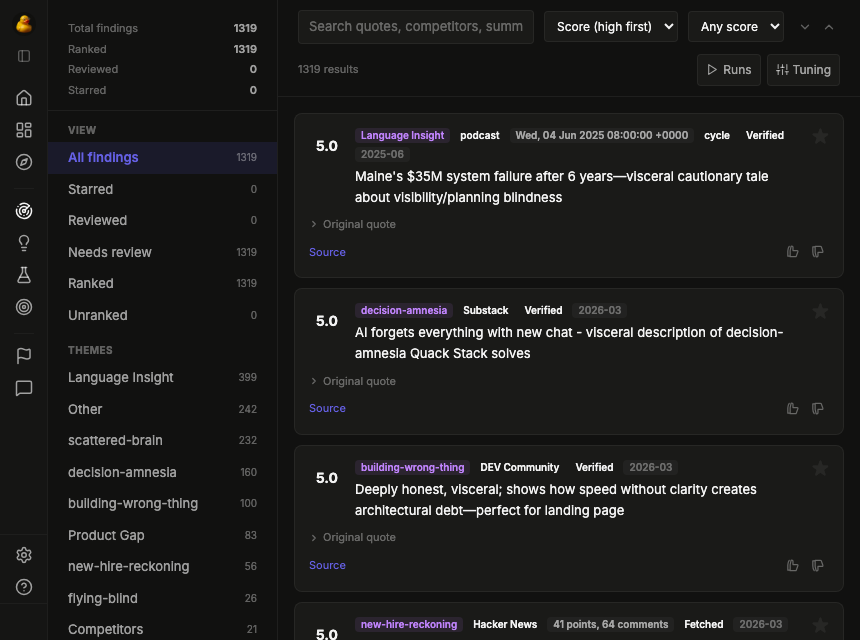
Your customers, in their own words
Support tickets from Zendesk, Intercom and HelpScout, calls from JustCall, the Slack channels you opt in. Real language, not a summary of it, so you can check every line.
Your call transcripts
Paste or connect meeting transcripts. Ten calls are enough for a first read: key quotes, what was asked for, what was complained about, and who said it.
The market beyond your customers
Your customers want more of the path they are on. The market may be moving. Quack reads what people say in public about your problem space, so you see both.
Your own decisions
Meeting notes from Granola, documents in Notion, conversations with Quack. The reasoning behind a decision is captured, not just the decision.
What is worth building, and why?
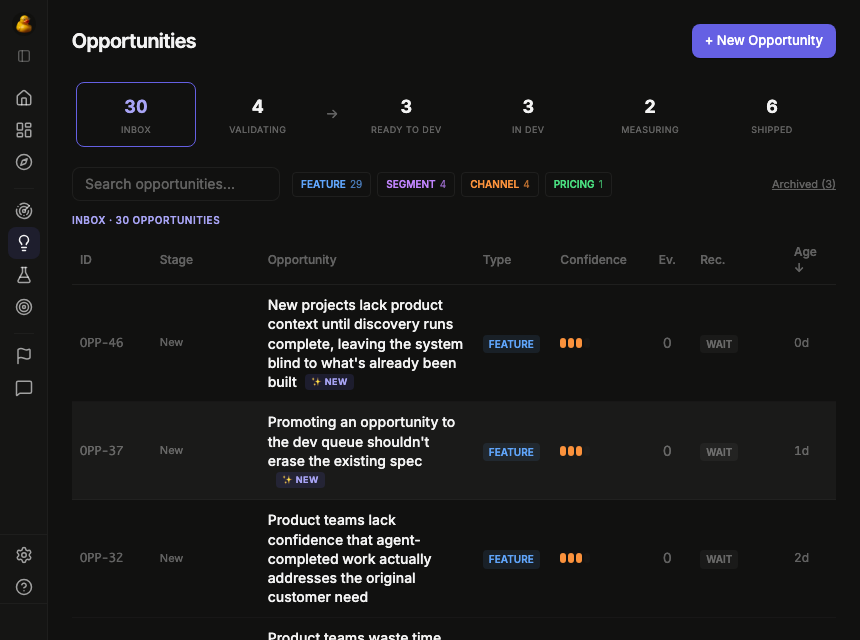
A case, not a backlog
Signals become a ranked case for what to build, each item traced to the quotes behind it. You see how much evidence there is, and how strong, before you decide.
What you decided, written down
Vision, who you serve, positioning, messaging: Quack drafts them from your inputs if you have not, and keeps them current as evidence arrives. Strategy stops being last year's slides.
Where what you said and what you build disagree
When new evidence contradicts something you decided, or what is being built drifts from what you said you would do, Quack flags it. You see the gap before you ship on it.
A second opinion, on request
Ask Quack to argue against an item. It will tell you what the evidence does not support, and what it would look for. It recommends. You decide.
What has to be true first?
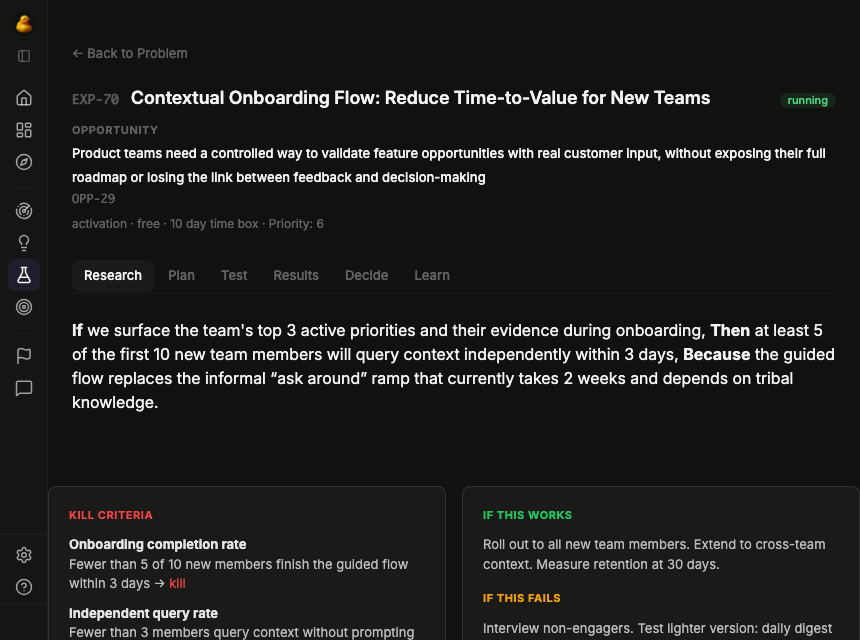
Say what would kill it, up front
Every bet gets a clear claim, the evidence it needs, and kill criteria set before work starts. As evidence comes in, Quack tracks whether you hit the bar or missed it.
Interview guides that write themselves
Questions mapped to what you need to learn. Run the calls, paste the transcripts, get the answer against the criteria you set.
Customers who vote
Share what you are considering through a feedback portal. When customers weigh in, the evidence gets stronger, in their words.
Bad ideas leave early
The job is to exclude bad ideas as early as possible, before engineers are committed. This is where they leave, cheaply.
Does the why travel with the work?
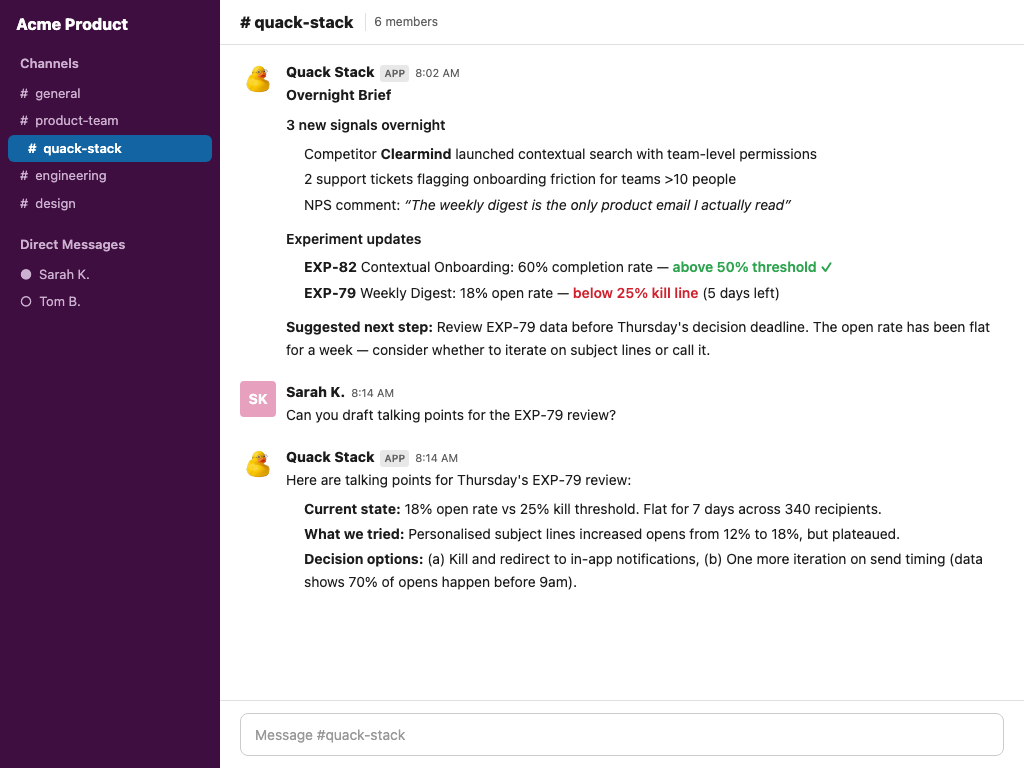
In Slack, every morning
A short brief in the channel the team already reads: what changed overnight, what needs a decision, what the evidence says. No dashboard required.
In the IDE and in your AI tools
Engineers and AI agents pull the why behind a task through MCP or the CLI. Every piece of work starts from the evidence, not from a ticket title.
In your tracker
Linear, Jira and GitHub stay the system of work. Quack is the system of why behind the tickets, with two-way sync on the way.
One record, checkable by anyone
Nothing is a black box. Every recommendation links to its quotes. If Quack is wrong, you can see where, and say so in one click.
Did it work?
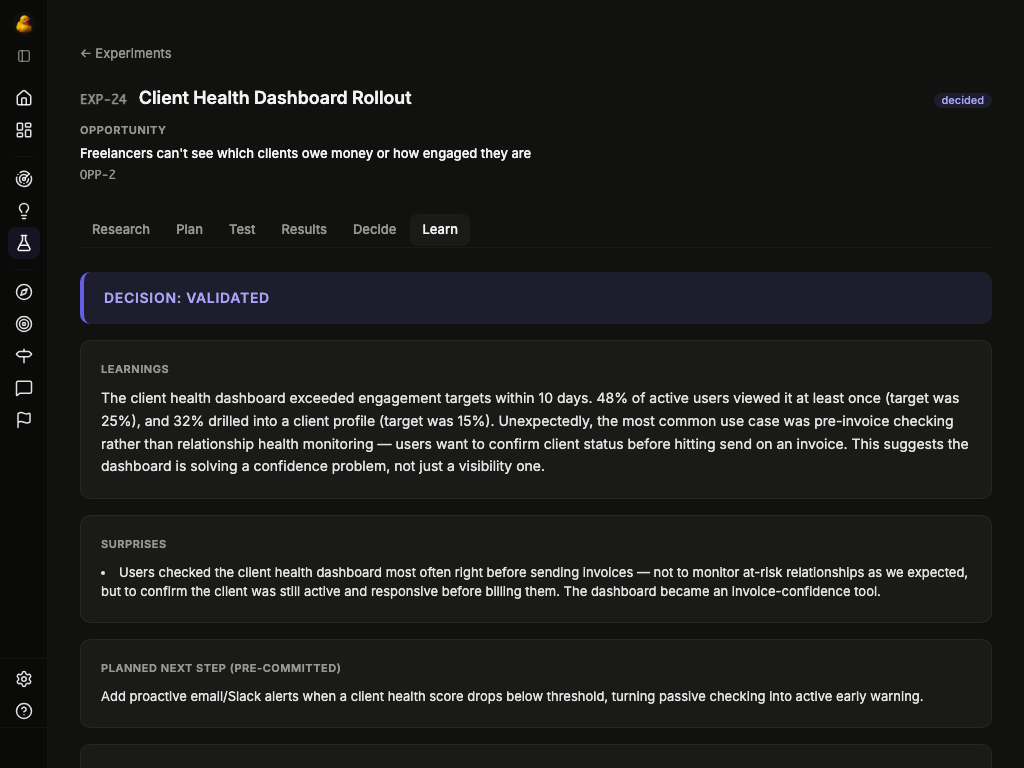
Shipped work is measured against its claim
When something ships, Quack tracks what happens next, against the claim it was built on. No dashboards to configure.
Clear outcomes
Positive, improving, negative, or guardrail breach. Quack tells you what happened and what it means for the next decision.
The loop closes
What worked strengthens the related case. What did not changes the picture. The record gets sharper every cycle, and the next decision starts from more evidence than the last.
Want to see it on your roadmap?
Bring what you plan to build. We will show you what the evidence says.